E-bikes for heavier people
E-bikes for heavier people
Heavier and larger people all too often shy away from cycling, partly because of the effort involved, but also out of concern that the bike or e-bike could be damaged by a high body weight. Here we present e-bikes for which such worries are unfounded, along with tips for safe fun on two wheels.

Cycling and being overweight go together very well. Along with swimming, it is the sport in which bones, joints and muscles suffer least from the extra body mass. At the same time, the physical effort required is easy to control. This works best with an e-bike or, to be more precise, a pedelec. The concern for many people with a high to very high body weight is mainly the stability of the bikes. Manufacturers routinely test their frame sets and approve them for sale with a maximum system weight. With pedelecs, however, this is not automatically higher than for bikes without an electric drive, so the motor eats into the maximum permissible weight, and therefore into the possible rider weight too.
Maximum permissible system weight =
Weight of bike + weight of rider including clothing / helmet + luggage / lock / bottles
So how does the rider's body weight affect the maximum load? The answer is simple: you take the difference. The heavier the person, the less is left of the maximum system weight for cargo. Important: every rack, every saddle and every pair of wheels also has an upper weight limit for the load it can take.
What should you look out for when buying e-bikes for heavier people?
It isn't just the frame of an e-bike that has to be designed and approved for the maximum system weight. All the fitted components, such as the saddle, wheels, any suspension and the brakes, should also be suited to the height and weight of a rider who is heavier than the average. On the one hand, this preserves riding enjoyment and comfort; above all, it ensures safety through sufficient stability and durability. The larger the frame size and the rougher the terrain, the more every ride and every extra kilo strains the material. It makes no difference whether it is an electric bike or a conventional one.
An average trekking bike without an electric motor is approved for a total weight of up to 130 kilograms, with a few models up to 140 kilograms or even more. And even though an e-bike, with its motor assistance, fundamentally has more potential to move a heavy rider more easily, its frame construction doesn't automatically allow more weight, let alone panniers or load in general. It's something of an e-bike paradox: the component that helps heavier people ride may, through its own weight, prevent them from staying within the maximum permissible weight on their bike.


Which type of e-bike is best for heavier riders?
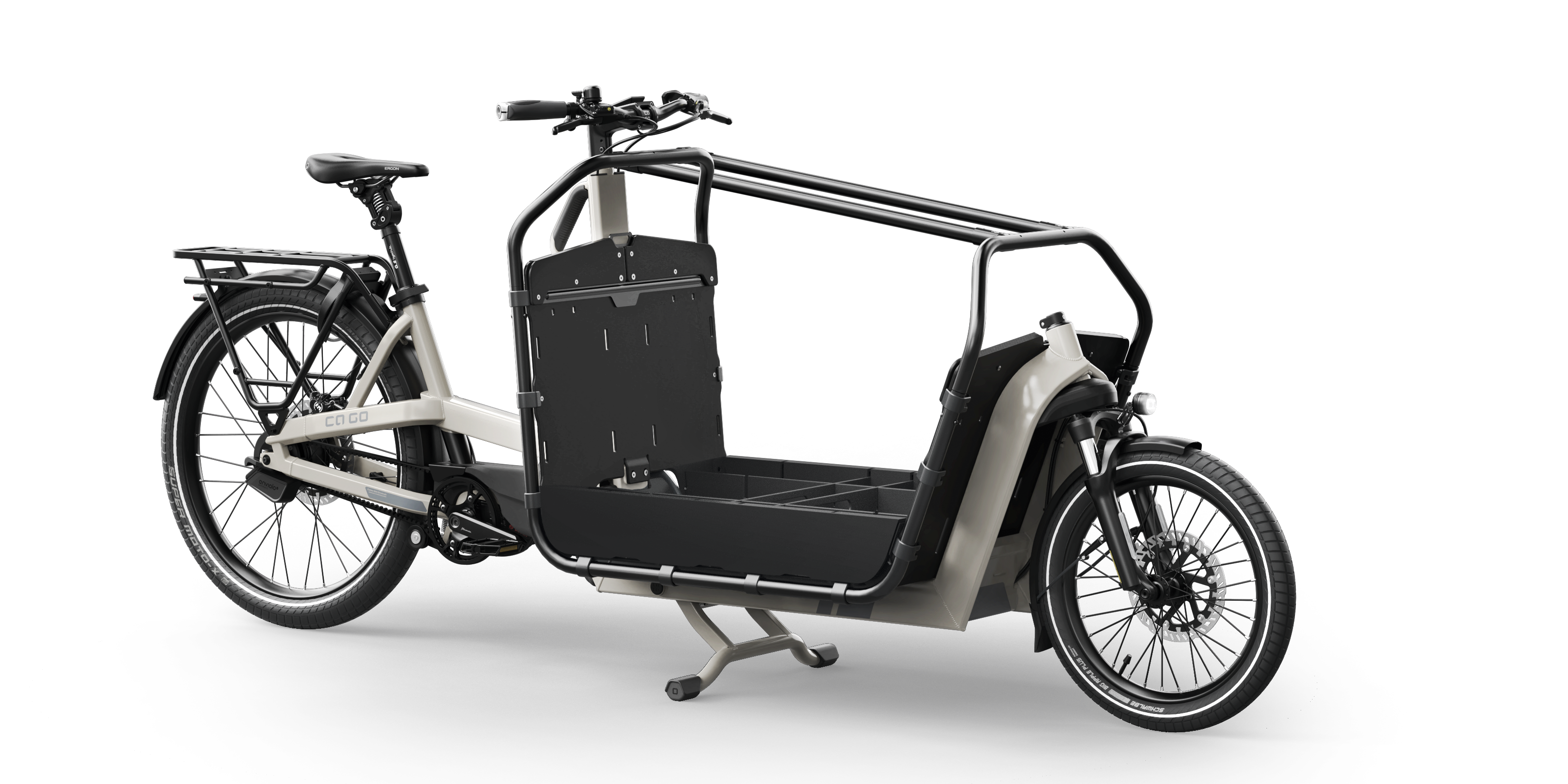
Depending on the type of bike, the maximum permissible weights of bicycles and pedelecs range from around 100 kilograms to, at the very top end, 170 kilograms. One category stands out from the crowd here, though it isn't one people primarily think of when looking for an everyday bike: cargo bikes. Not only are their frames designed for higher weights, but components such as wheels, seat post, stem and brakes can also cope with more. Whether it's the complete weekly shop including crates of drinks, or a good part of the system weight is taken up by the rider, makes no difference to riding comfort and safety. Whatever the brand, cargo bikes simply withstand a lot by their very function. In the case of Ca Go, the premium cargo bike manufacturer from Koblenz, rider weights of 120 kilograms are no problem.
Which heights and weights is the Ca Go CS suitable for?
If the rider alone used up the full 120 kilograms of capacity, then after subtracting the bike's own weight there would still be almost 25 kilograms left for luggage or cargo, which on the CS models could be spread across the three load zones of the Triple Load Space. On the Ca Go FS series, it would be as much as 50 kilograms extra. Because a bike and its components are usually not loaded to their limits, they generally ride more pleasantly than e-bikes whose weight capacity is fully used up.
Ca Go CS | Ca Go FS | |||
| Maximum system weight | 180 kg | 225 kg |
Another plus point for Ca Go's cargo pedelecs is the fairly low step-through. To build frames in a particularly simple yet stable way, some manufacturers run the frame triangle between the bottom bracket and the head tube high up, regardless of inside leg length. When getting on, you then have to lift your legs high or swing them over the saddle. Larger people often have problems with precisely this. That is why Ca Go made sure that the frame area above the mid-mounted motors allows a comfortable step-through. On the Ca Go CS it is just 53 centimetres. Cargo bikes rarely come in a choice of frame sizes, if at all, but on Ca Go models a special geometry and widely adjustable components accommodate riders from 1.60 to 2.0 metres tall.


Does a pedelec for larger people need a particularly powerful motor?
Which electric drive is recommended for an e-bike for heavier people? In principle, all pedelec motors provide propulsion and therefore make riding easier. As cargo bikes are more about covering distances and everyday mobility than sport, bikes with a mid-mounted motor are a good choice. Thanks to their reduction gearing, they deliver plenty of torque despite their compact size, especially when pulling away and on steep uphill sections. Even with very little physical fitness, you can cover distances that would otherwise be possible only for athletes without an e-bike. Ideally, you combine this kind of auxiliary drive with a continuously variable automatic gear system. Put simply, with this kind of drivetrain you pedal constantly with the force and cadence that feels most comfortable to you, and the bike does the rest.
Which components make riding easier at a high body weight?
Besides the position of the drive, the type of gear system and sufficient stability reserves in the frame, there are other details that become more important for safety and riding feel when the rider weighs a few kilos more:
| Component / assembly | What does it do? | Points to note above 90 kilograms |
|---|---|---|
| Motor / drive / battery | Not every mid-mounted motor is the same, despite the standardised maximum output of 250 watts*. On an e-bike for heavier people, torque and robustness count, which is why motors designed specifically for cargo bikes are characteristically a better fit and promise greater longevity. Larger batteries compensate for the higher power consumption caused by the rider's extra weight. | Bosch Cargo Line motors, among others, are offered in both the Ca Go CS and FS models. Other models are somewhat more compact and lighter, but cargo motors promise more power when pulling away and, when heavily loaded, better pulling power. At a high total weight, this is a very suitable choice. Accelerating more mass costs more energy, so a pedelec for heavier people should have a battery of at least 500 watt-hours. |
| Suspension fork / suspension | Suspension forks cushion impacts on the front wheel. The heavier the system weight and the greater the share of the total load on it, the harder the shocks from potholes or kerbs are transmitted to the handlebars. The problem: technically very simply built suspension forks are quickly overloaded and become too soft or even fail early. | Two alternatives: having no suspension fork on the bike at least rules out early repair costs, but comfort suffers. If you don't want to do without one, look for a high-quality suspension fork on the e-bike. The SR Suntour on the Ca Go CS is a fork made specifically for the demands of a cargo bike. Both the travel and the durability cope well with heavier loads. |
| Brakes | Kinetic energy is calculated from a body's mass and speed. This means every kilo of system weight also increases the momentum the brakes have to control. With a maximum of 180 to over 220 kilograms, cargo bikes at 25 km/h carry about as much energy as a moped, so the braking system should not be under-dimensioned. | Besides the manufacturer's brand, two features of a bike brake indicate strong, reliable bite: the size of the brake discs and the number of pistons pressing on the disc. Instead of the usual 160 millimetres, the Ca Go CS brakes on discs of over 200 millimetres. In addition, six pistons from industry leader Magura slow the bike instead of four, on both the CS and the FS. |
| Centre of gravity | The position of the centre of gravity has a major influence on a bike's handling. The position and mass of both rider and luggage matter here. The greater the mass, and above all its distance from the ground, the less stable the bike. | The smaller 20-inch wheels and the shallow seat tube angle of the Ca Go CS, at only 65°, place the rider fairly low towards the road, without the distance from saddle to bottom bracket becoming biomechanically too small and forcing you to pedal with overly bent knees. Carrying heavy loads in the low Center Rack of the CS improves the handling rather than affecting it negatively. |
| Steering | Cargo bikes usually redirect the steering movements, meaning there is no direct connection between fork and handlebars, in order to make room for the load zones. This can make the steering sluggish and reduce the steering angle. | Ca Go models are fitted with cable-pull steering. It gives a very natural riding feel, and thanks to its gearing you need smaller steering angles to carry out tight manoeuvres. The ends of the handlebars therefore don't come as close to your upper body and thighs as they do with a conventional linkage rod. |
| Tyres | Narrow tyres and/or too little air pressure fundamentally risk the rim bottoming out under a heavy load. The higher the system weight, the more likely a puncture or failure. | Tyres from 50 millimetres wide offer heavier riders enough volume to cope with potholes and kerbs. With 60 or 65 millimetres you have a safety margin. Also important: the tyre model should be able to take 4 bar or more of air pressure. |
* To be precise, the continuous or nominal output is capped at 250 watts. In the short term, the actual output is considerably higher without breaching the legal requirements for pedelecs.
Conclusion: the Ca Go CS offers ideal conditions for riding enjoyment for heavier riders
The compact Ca Go CS in particular combines many qualities that make cycling much easier, more comfortable and more fun for heavier and larger people. The seating position doesn't require any special flexibility, and the cable-pull steering leaves plenty of room in the cockpit area. Even in very tight turns, there is no contact between the grips and the rider's chest or stomach. The focus on carrying loads calls for a particularly stable frame and fork set, so the maximum rider weight of 120 kilograms is no great challenge for its durability and stiffness. Its manoeuvrability and clever load distribution even make you forget that it is a cargo bike. The sporty look, too, has nothing of a purely practical bike about it. This makes the model range a good choice both as an everyday e-bike and as a means of transport for heavier people.
Our bikes
-
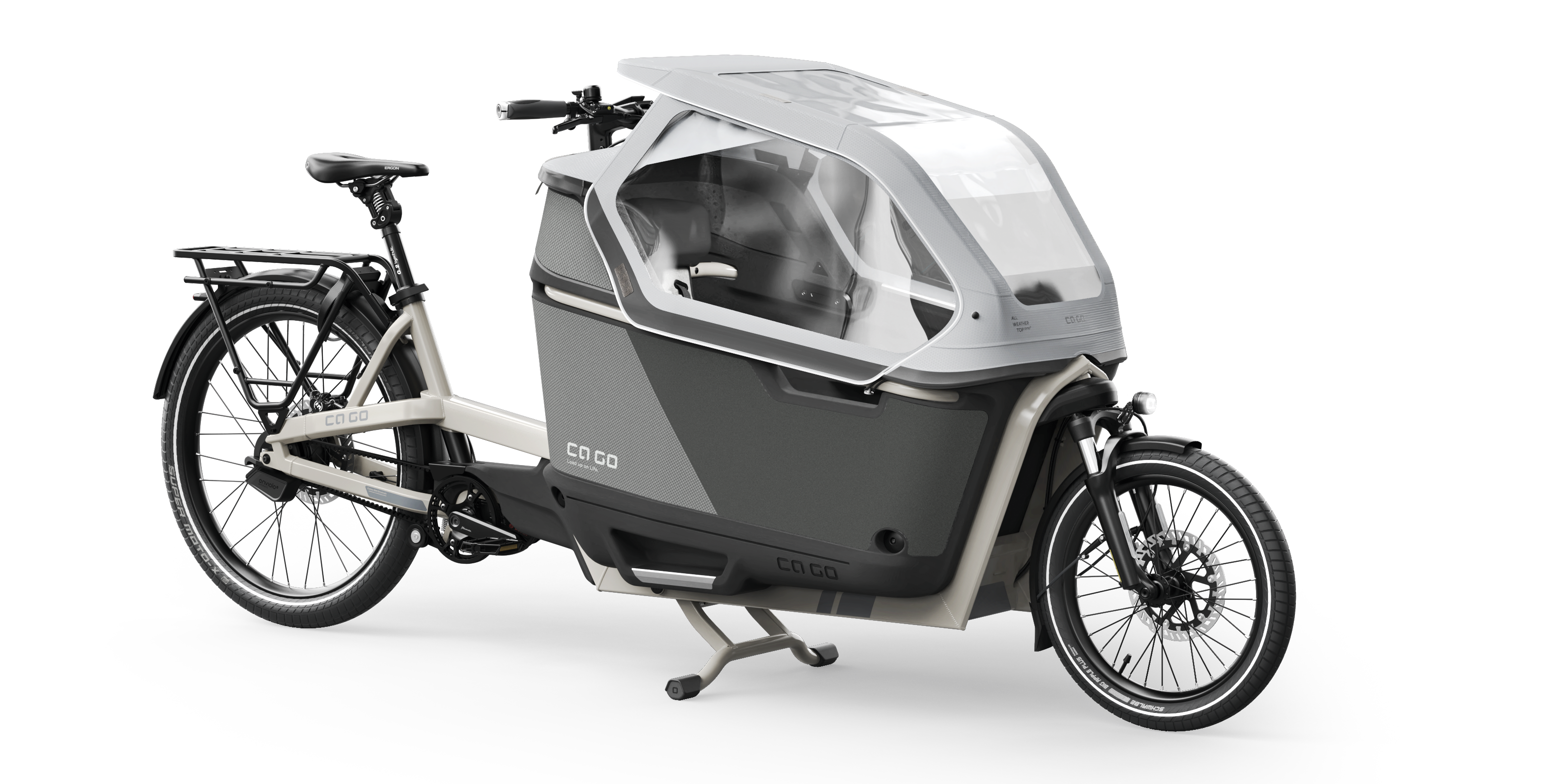
FS200 Life Family-Plus – Edition 5
The fully equipped electric family vehicle
-
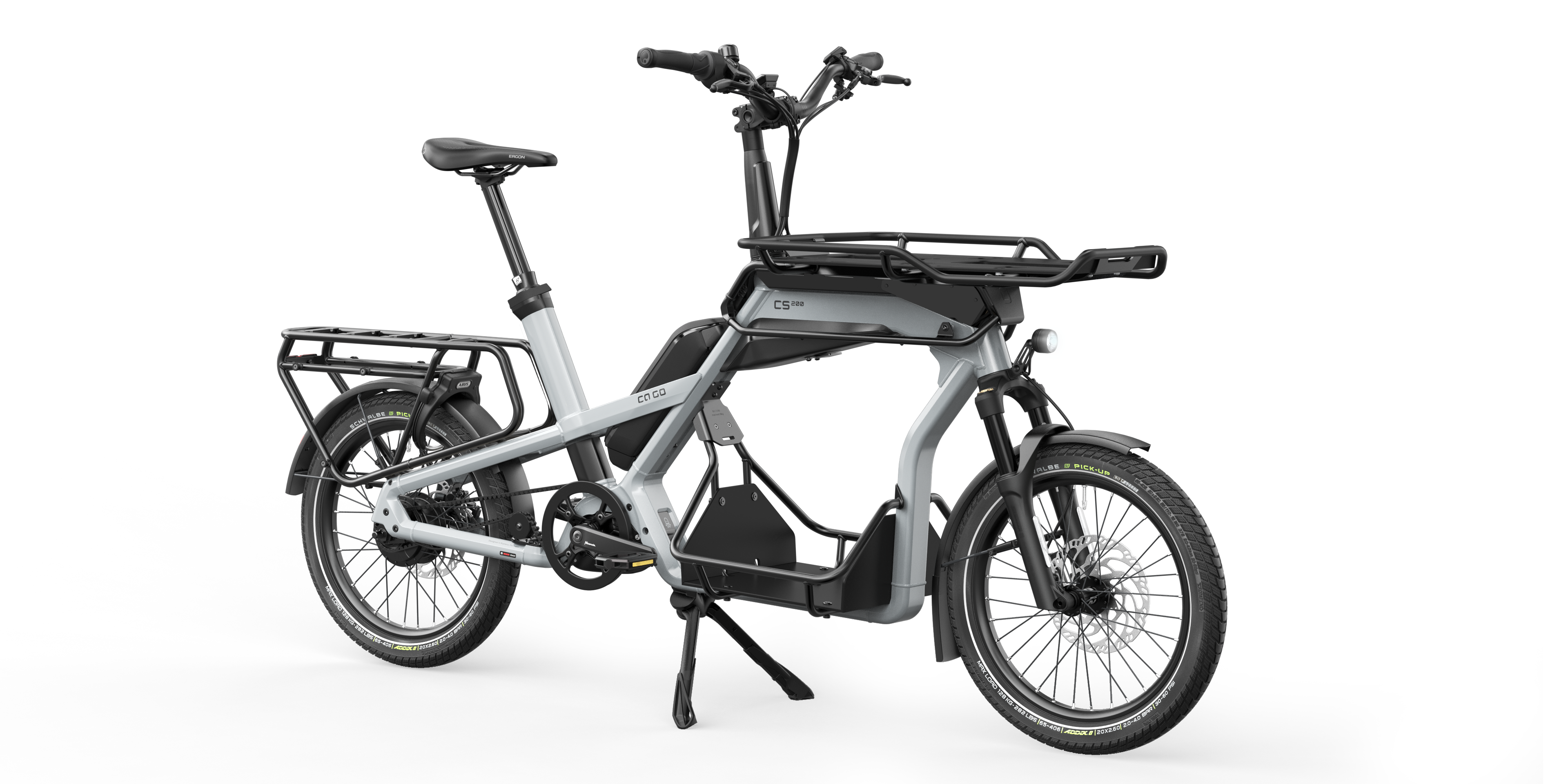
CS200 Exclusive – Edition 5
Maximum comfort and flexibility with extra space for your cargo - for those who won't compromise.
-
FS200 Vario Open-Pro – Edition 5
For sure: The versatile load master among e-cargo bikes