How to load a cargo bike properly – How to Ca Go Episode 3
Published on
Loading a cargo bike properly: in this post we explain how to load your cargo bike safely, every time.

Loading an e-cargo bike properly
Cargo bikes and e-cargo bikes are taking to the roads in ever greater numbers, especially in urban areas. Their advantage: they take up far less space in the city than cars. When you factor in the total cost, the e-cargo bike also comes out clearly ahead of a car: lower purchase price, no insurance, no road tax, no fuel. It’s no wonder, then, that more and more families are either going completely car-free with a cargo bike, or at least giving up the second car in favour of one. The trend is also borne out by the figures: in 2022, a total of 165,000 e-cargo bikes were sold, compared with 120,000 the year before. See also our article on the real costs of cargo bikes, cars and the like.
The best cargo bikes and e-cargo bikes, however, are only as good as the way their riders use them. In this article we look at how to load a cargo bike properly and what to bear in mind when transporting heavy and bulky loads.
How much load is allowed?
Cargo bike riders must always pay attention to the maximum permissible weight stated by the manufacturer. For example: a cargo bike has a maximum permissible weight of 160 kilograms (including cargo box, all attachments and battery). The bike itself weighs 40 kilograms and the rider (including clothing) weighs 90 kilograms. In this case, only 30 kilograms of load are possible. That is a figure you can quickly exceed when carrying a child and the weekly shop. Take the Ca Go FS200, with its maximum permissible weight of 225 kilograms, and there is considerably more leeway for carrying children, passengers or other cargo.

How exactly do I load a cargo bike properly?
As mentioned, the weight of the load, the bike and the rider must always be kept in mind, otherwise frames can break or brake systems can fail in critical situations. The best models on the market should be specified so that they perform well when ridden at the permitted weights and loads. But weight isn’t everything. The way you load the bike, or more precisely, how the load is arranged, also calls for some care.
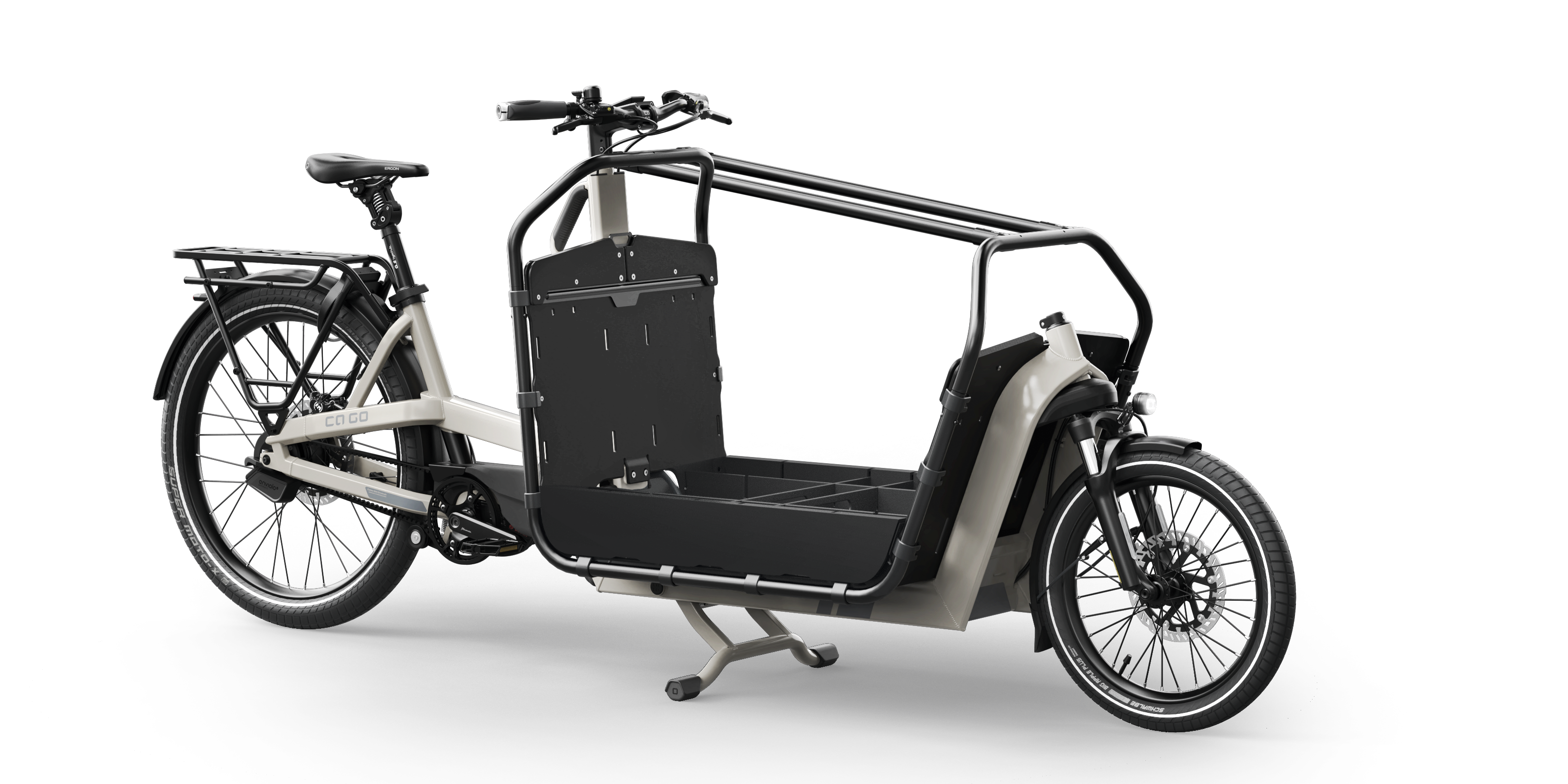
- Heavy items go at the bottom of the cargo box. It’s a bit like a shopping basket: you don’t put heavy jars or cartons of milk on top of light, fragile things such as eggs or yoghurt pots. Because cargo bikes are often long, it is especially important to keep the bike’s centre of gravity low. This makes the bike easier and, above all, safer to manoeuvre. That is why the Ca Go CS, with its low-slung Center Load Rack, sits so stably on the road even with a heavy load.
- Position the load as centrally as possible in the cargo box before setting off, so that you don’t have to keep correcting at the handlebars or lean to one side to compensate for a sideways tilt.
- With heavy loads in particular, don’t just load the bike correctly: where possible, secure the load with a rope or a bungee cord as well, to stop it shifting in a bend, which would force you into sudden steering movements.
- If you’re carrying children in the cargo bike, make sure they sit as still as possible. This happens naturally when the bike is fitted with well-placed, good-quality child seats and harnesses, as on the FS Life, for example. Also make sure children don’t let their arms hang over the edge of the cargo box. In a fall, this can lead to serious injuries.
- More and more cyclists now want to carry their dog in the cargo bike. In this case, make sure the animal is held securely in the cargo box with a special harness, ideally fixed to the floor of the box.
What do I need to look out for when my e-cargo bike is heavily loaded?
It isn’t only how you load your cargo bike that matters. There are also things to bear in mind once the bike is loaded and you want to ride with maximum safety and comfort on cycle paths and on the streets of the city and surrounding areas.
- Practise parking and setting off again. Even before your first ride with a heavily or even fully loaded e-cargo bike, you should practise parking it and then setting off again. It’s best to practise parking and getting the bike ready to ride again without any extra weight at first. Once you have put the bike on its stand and back onto its wheels several times, you can practise the process with more weight and then set off on your first rides. Incidentally, the best bikes, including the Ca Go FS200 Life, make it easier to put the cargo bike on its stand with a special handle integrated into the frame.
- Select the right gear in advance. It makes sense to select the right gear before loading up and setting off. With a fully loaded bike and a gear that is too high, pulling away becomes an unnecessarily tricky balancing act.
- Ride with foresight. With a heavy cargo bike, you should anticipate what’s ahead. Before a steep hill, it helps to shift into a low gear early. This protects drive components such as the chain or belt, as well as the motor. You also keep a clean line on steep climbs and don’t have to shift in desperation, wobbling about on the bike, just before you grind to a halt.
- Take bends with care. The same applies in bends. If you’re riding a heavily loaded bike and approaching a corner, it’s better to find the right speed well before the bend than to have to brake in the middle of it and, in the worst case, skid.
Our Bikes
-
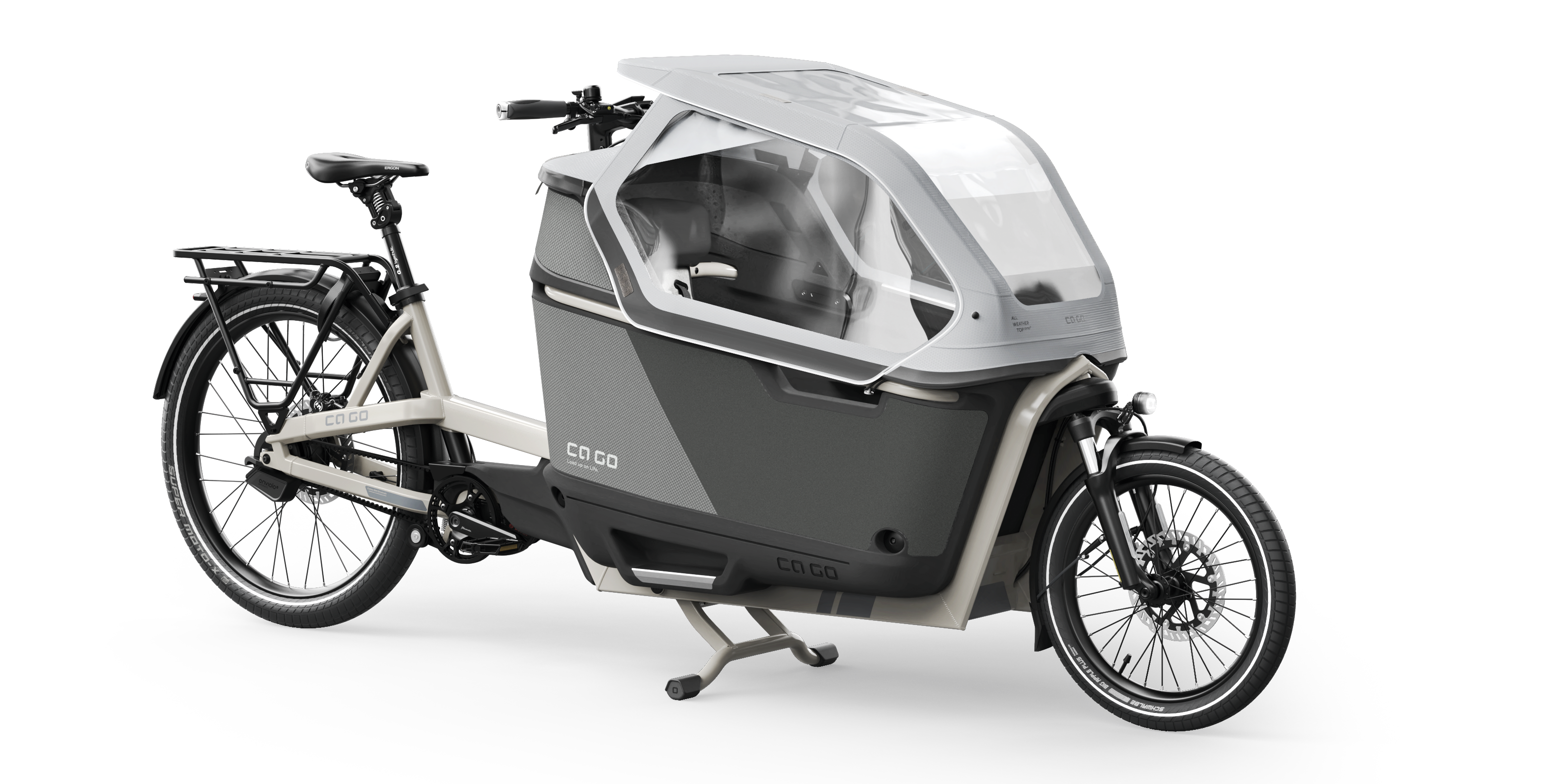
FS200 Life Family-Plus – Edition 5
The fully equipped electric family vehicle
-
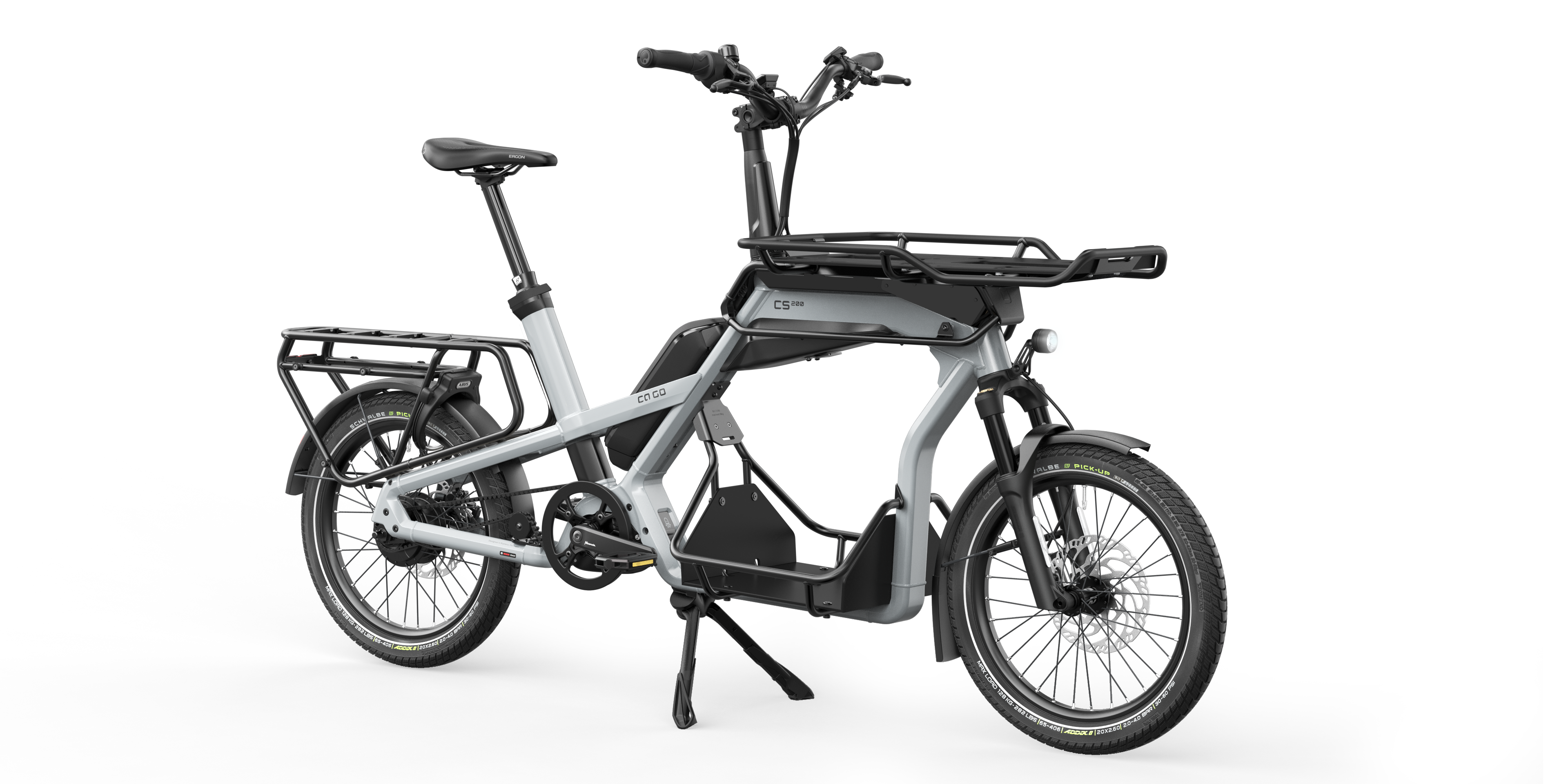
CS200 Exclusive – Edition 5
Maximum comfort and flexibility with extra space for your cargo - for those who won't compromise.
-
FS200 Vario Open-Pro – Edition 5
For sure: The versatile load master among e-cargo bikes